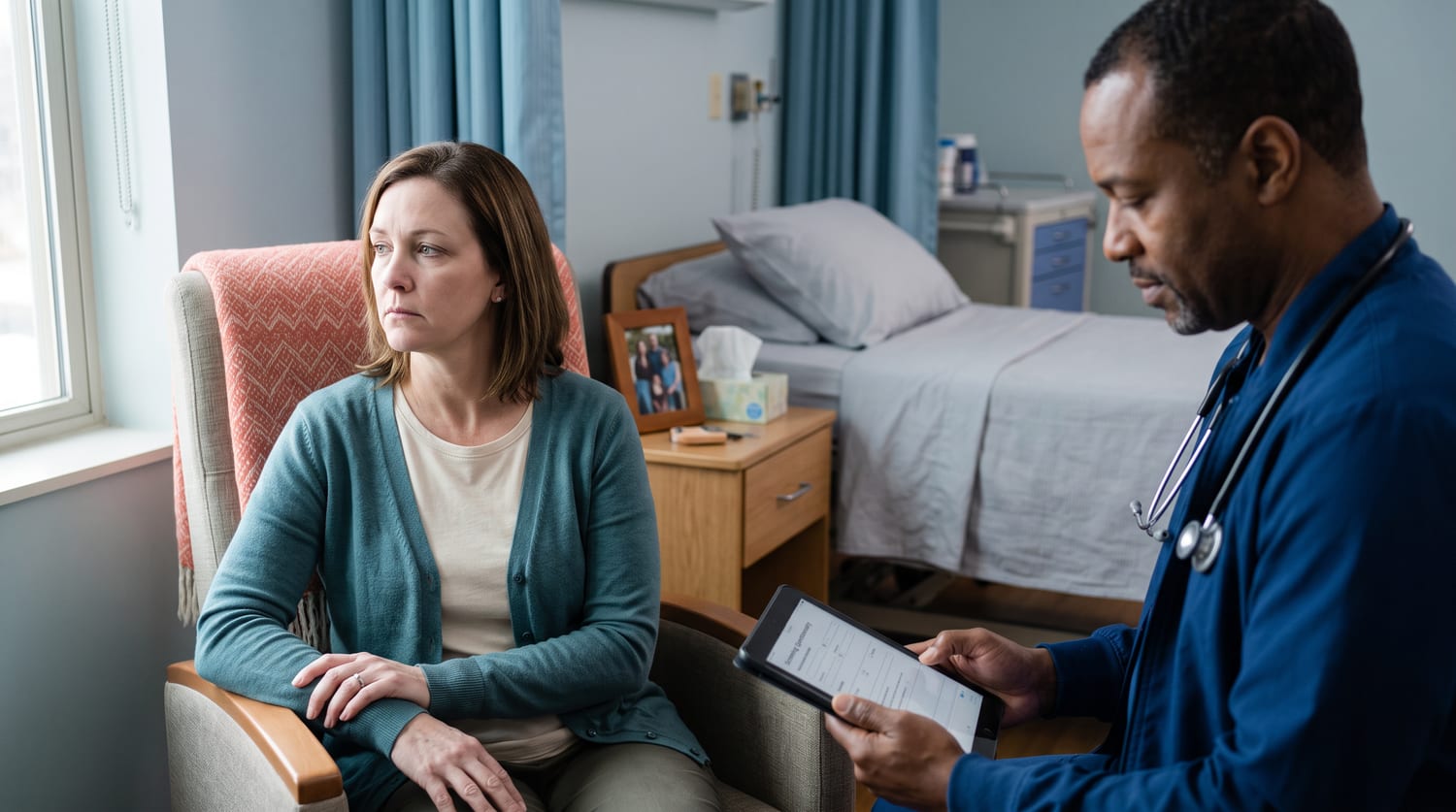

If you're caring for a parent, spouse, or loved one leaving the hospital, you've probably felt it: the mix of relief and quiet panic. The monitors and nurses are about to disappear, and suddenly you are the care team.
You are not alone — and with the right questions asked early, the journey from hospital to home can be far less overwhelming.
Five questions to ask before discharge
1. Who is following the specialty issues?
If your loved one saw a neurologist, cardiologist, or psychiatrist in the hospital, ask directly: who takes over this care after discharge, and when is the first appointment? "Follow up with a specialist" without a name and a date is where recoveries stall.
2. What exactly changed in the medications?
Hospital stays almost always change the medication list. Ask for a written list that marks what's new, what's stopped, and what's changed dose — and have someone walk you through why.
3. What warning signs should trigger a call — and to whom?
Every condition has early warning signs that are much easier to treat than the emergency they become. Ask for the two or three signs to watch for, and make sure you know who to call first (it should rarely be 911 as the only option).
4. What will recovery actually look like?
Ask about the expected timeline — good days, setbacks, and milestones. When families know a rough dip is normal, they panic less and observe better.
5. Who coordinates all of this?
This is the question that reveals whether the plan is real. If the answer is a shrug, be politely persistent, because coordination is care.
The families who do best aren't the ones with medical training. They're the ones who know exactly who to call.
How Ask Health supports families
Ask Health was built so that families don't have to become care coordinators overnight. Our multidisciplinary team follows patients through the transition — from hospital, through rehabilitation or skilled nursing, and home — with one integrated care plan and specialists who already know the patient's story.
With a hybrid model of bedside visits and digital monitoring, someone qualified is always watching — so you can go back to being a daughter, a son, or a spouse, instead of a dispatcher.
Caring for someone making this transition now? Reach out to our team — we'll help you understand the options.