
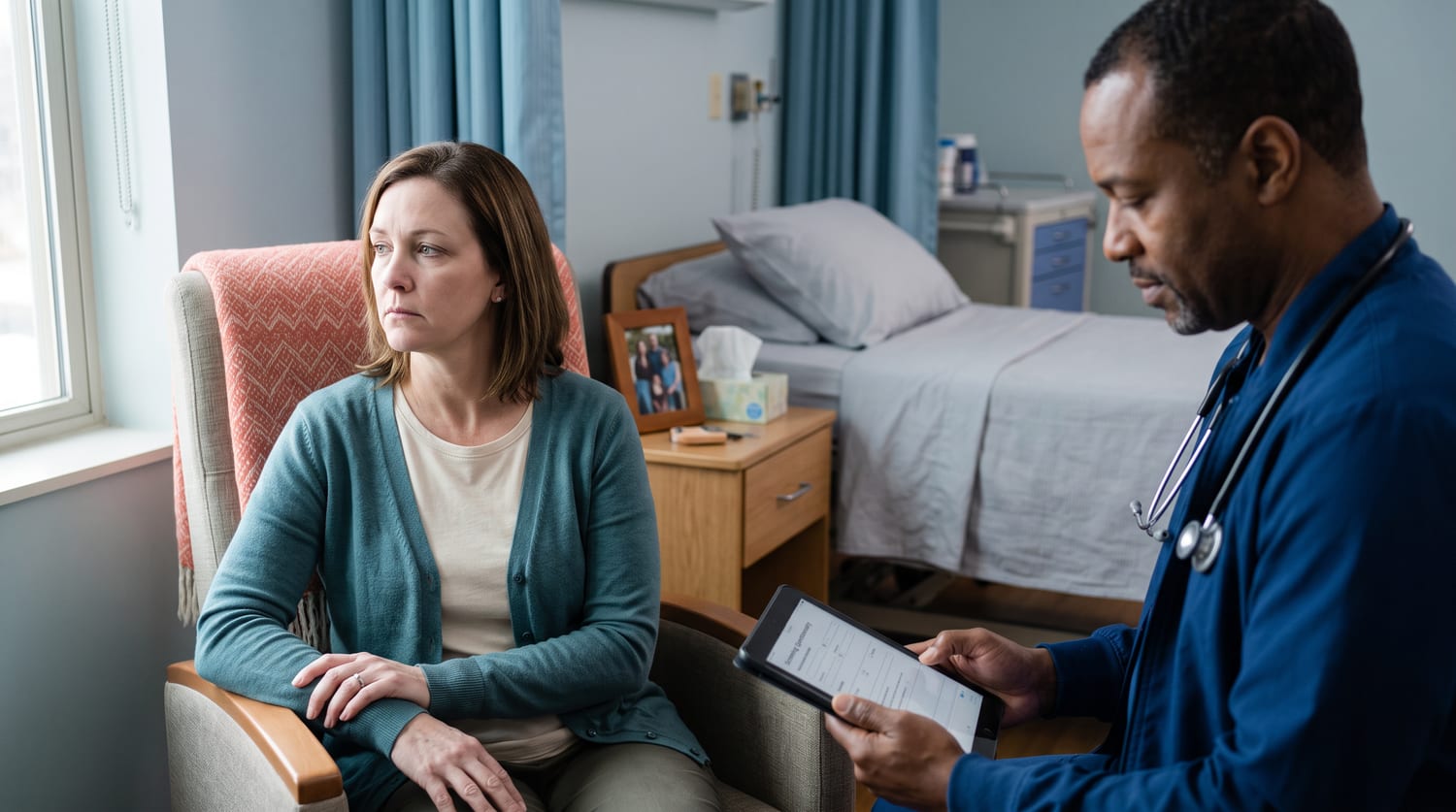
Between 25 and 35 percent of patients admitted to skilled nursing facilities arrive with clinically significant depression. Not low mood. Not adjustment difficulties. Clinically significant depression, the kind that blunts motivation, disrupts sleep, reduces appetite, slows wound healing, and predicts readmission. Most facilities are not catching it at admission. The good news is that inconsistent screening is a process problem, and process problems are fixable.
1. Recognize That Depression Is a Physical Recovery Problem, Not Just a Mental Health Problem
Depression in SNF patients is not a secondary concern you address after mobility goals are met. Research consistently links untreated depression to slower functional recovery, lower therapy participation rates, and significantly higher 30-day readmission risk. When a patient refuses to engage with PT twice in the first week, the instinct is to push harder. The better question is whether depression is the barrier, because treating the depression often unlocks the recovery.
2. Stop Relying on Clinical Impression Alone at Admission
Experienced nurses and therapists are skilled clinicians, but depression in older adults often does not look like textbook sadness. It presents as fatigue, withdrawal, cognitive slowing, or somatic complaints, symptoms that are easy to attribute to the admitting diagnosis. Relying on clinical impression alone means your screening results are inconsistent across shifts, disciplines, and admission volumes. A structured tool used at every admission removes that variability.
3. Use a Validated Screening Tool, and Use It Every Time
The PHQ-9 and the Geriatric Depression Scale (GDS-15) are both validated, widely accepted, and straightforward to administer at admission. The PHQ-9 takes under five minutes and produces a score that travels with the patient through the care plan. The GDS-15 was designed specifically for older adults and avoids somatic items that can confound results in medically complex patients. Pick one, train your admissions staff to administer it consistently, and document the score. Variability in which tool gets used, or whether any tool gets used, is where the data falls apart.
4. Build the Screen Into the Admission Workflow, Not Beside It
If depression screening is an optional step that happens "when there's time," it will not happen consistently. The facilities that screen reliably are the ones that have embedded the tool directly into the admission assessment sequence, same as fall risk or skin integrity, so the screen is triggered automatically rather than remembered individually. Your EHR can prompt it. Your admission paperwork can require it. The mechanism matters less than the consistency.
5. Know What a Positive Screen Requires Next
A PHQ-9 score of 10 or above indicates moderate depression and warrants a documented clinical response. That response does not have to begin with a psychiatric referral, it should begin with a conversation and a care plan notation that every discipline can see. But "we screened and found it" is only half the work. The other half is having a clear protocol: who reviews the result, within what timeframe, and what the escalation pathway looks like when scores are in the moderate-to-severe range. Without that protocol, screening data sits in the chart and nothing changes.
6. Connect Positive Screens to a Psychiatric or Counseling Resource
For patients who screen positive, your facility needs a reliable next step, and that step cannot be a weeks-long wait for an outpatient psychiatry appointment that a post-acute patient cannot realistically keep. Ask Health's Psychiatry and Counseling specialists see patients at the bedside, inside your facility, working alongside your existing clinical staff under one integrated care plan. When a patient screens at PHQ-9 ≥ 10 on Monday, a specialist can be there that week, not after discharge. That continuity is what converts a positive screen into actual treatment.
7. Track Depression Screening as an Operational Metric, Not a Clinical Afterthought
Facilities that treat depression screening as a compliance checkbox tend to have inconsistent data. Facilities that treat it as an operational metric, reviewing screening rates at QA meetings, tying it to readmission trend analysis, and including it in survey preparation, tend to catch the 35 percent that everyone else misses. Undetected depression is not just a patient safety issue. It shows up in your therapy utilization numbers, your discharge-to-home rates, and eventually in your star ratings. Track the screen. Act on the score. Measure what changes.
Depression is one of the most prevalent and most treatable conditions in your SNF, and one of the most consistently underdetected. When you close the screening gap at admission, you are not adding a task to an already demanding workflow. You are removing one of the most common hidden barriers to the recovery your entire team is working toward. The patients who get better fastest are often the ones whose depression was found on day one.
Tell us about your facility, your practice, or your loved one. Call (551) 277-4441 or visit ask-health.net/contact.html and our team will respond within one business day.