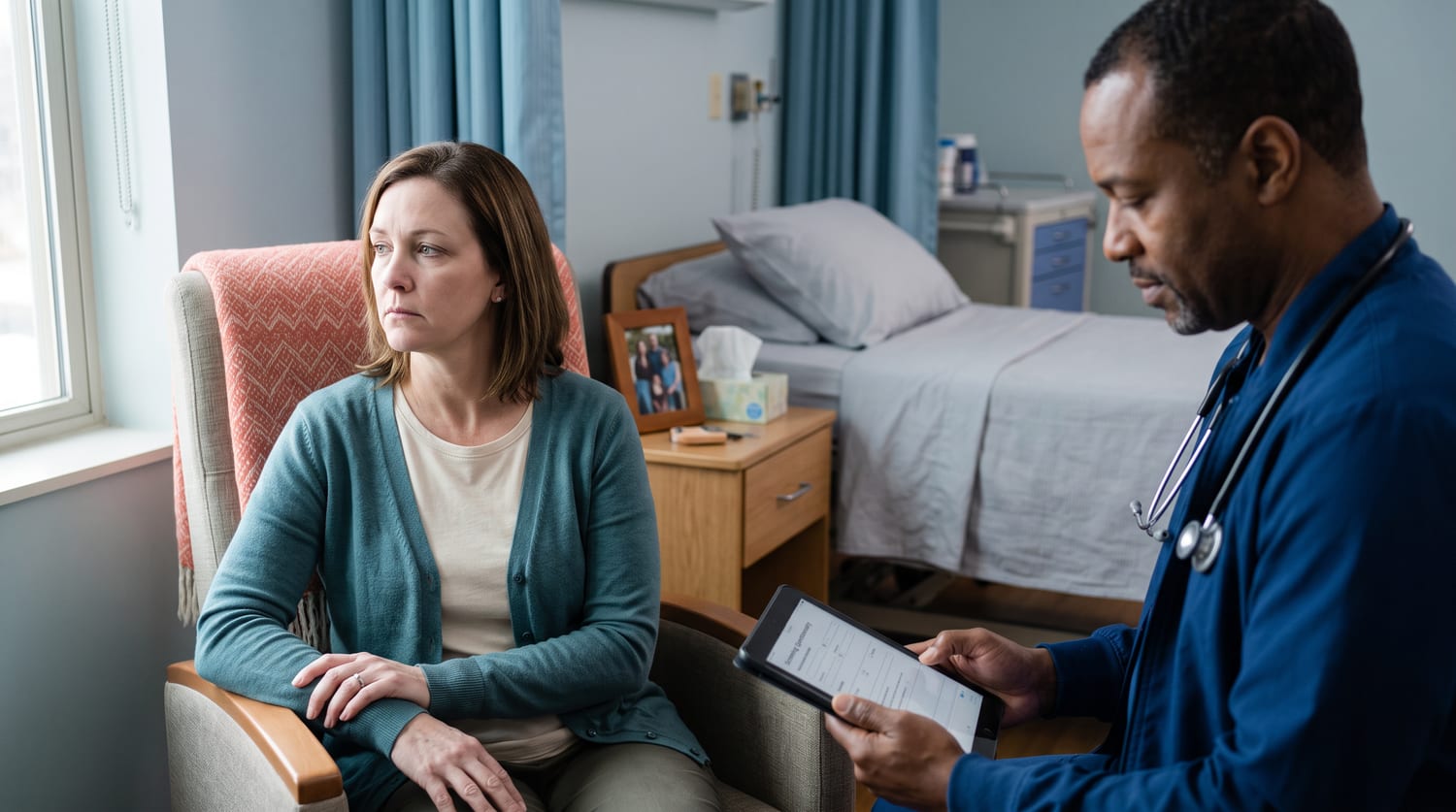

The pandemic made telehealth mainstream almost overnight. For routine follow-ups and simple questions, it was a revelation. But for the patients who live in post-acute care — medically complex, often frail, frequently managing several conditions at once — a video call is not a care model.
The limits of screens alone
Ask any facility director who relied on telemedicine-only specialty coverage: something important gets lost. A camera can't palpate an abdomen, assess muscle tone after a stroke, or read the room when a family is struggling with a difficult decision.
At the same time, the old model — waiting days or weeks for a specialist to physically visit, or transporting a fragile patient across town for a fifteen-minute consult — fails patients in the opposite direction.
Hybrid care: the best of both
Ask Health's approach combines in-person clinical care with digital technology, and the sequencing matters:
- In-person specialists build the foundation. Our physicians examine patients at the bedside, establish relationships with facility staff, and create the care plan.
- Technology maintains the connection. Between visits, digital tools let our team monitor progress, respond to changes, and support facility clinicians in real time.
- Escalation is intelligent. When something changes, the decision to see the patient in person is made by a clinician who already knows them — not a stranger reading a chart.
Technology doesn't replace the clinician at the bedside. It multiplies how many bedsides that clinician can watch over.
What this means for facilities
For post-acute facilities, hybrid specialty coverage changes the math. Staffing shortages — which have touched 80% of facilities — hit hardest when every clinical question requires an outside appointment. With specialists virtually embedded in daily operations and physically present when it counts, facility teams can manage higher-acuity patients with confidence.
That's better for census, better for compliance, and above all, better for the people in the beds.
Curious what hybrid specialty coverage would look like for your organization? Start the conversation.